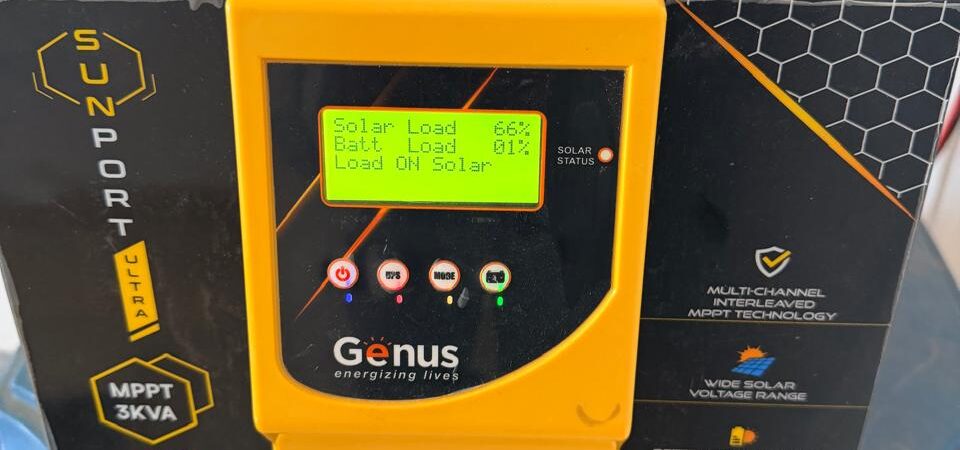
How Off-Grid Solar Inverter Distribute the Load?
When I installed my off-grid solar setup, one thing that confused me a lot was load distribution.
Even the vendor was not able to explain it properly. He simply told me:
“Even if grid is available, don’t run load more than inverter capacity.”
Honestly, hearing this made me little disappointed and confused. I was thinking:
“How is this possible in 2026? Why can’t inverter simply shift extra load to grid automatically when load increases?”
After that I started reading inverter menus myself and doing real experiments at home. Slowly I understood how these modes actually work practically.
And trust me, many solar users are confused about this.
So here I am sharing what I personally observed.
Three Main Modes I Observed
Different companies may use different names, but in my inverter I found mainly these three types of behavior.
1. Hybrid Mode
In this mode:
- Battery charges from solar
- But house load mainly runs on grid
This mode is useful if:
- you want battery backup
- but don’t want to stress solar and battery during daytime
Personally I felt this mode uses grid more aggressively.
2. Light CPU Mode
This mode became most interesting for me.
Here:
- Load starts from Solar + Battery
- But when load suddenly becomes high, inverter automatically bypasses to grid
This is actually the smart protection mode many people don’t understand.
I have connected two heavy things with my inverter:
- 1.5 Ton Inverter AC
- 1HP Submersible Pump
Normally when I run:
- AC
- fan
- TV
- lights
then load stays around 50% to 60%.
Everything runs smoothly on solar.
But the interesting part starts when I turn ON the water pump.
Suddenly inverter shifts entire load to grid.
Why?
Because submersible pump gives sudden starting load. Inverter senses this heavy spike instantly and bypasses to grid for protection.
And honestly, after seeing this practically, my earlier confusion got cleared.
But Then Another Interesting Thing Happened
One day instead of pump, I turned ON:
- AC
- Induction
together.
Now surprisingly inverter did NOT shift immediately to grid like it did with pump.
Instead:
- load slowly increased
- reached near 100%
- even crossed around 105%
- inverter started showing overload warning
Still it tried to continue on Solar + Battery.
This helped me understand something important.
Pump creates sudden high surge load.
But induction load increases more gradually compared to pump startup surge.
That is why inverter behavior was different.
Later finally inverter shifted to grid after trying hard to manage the load from solar and battery.
This practical experiment taught me more than vendor explanation.
3. Strong CPU Mode
This mode is completely different.
Here inverter tries to keep all load on:
- Solar
- Battery
as much as possible.
Even if load becomes high, it avoids shifting to grid quickly.
Basically inverter becomes aggressive toward solar usage.
This mode is good if:
- you want maximum solar usage
- lower electricity bill
- better solar utilization
But it can stress battery and inverter more if load management is poor.
What I Finally Understood
Off-grid inverter is not only checking:
- total load
It is also checking:
- sudden surge load
- startup current
- battery support
- solar availability
- safety limit
That is why two appliances with similar watt usage can behave completely differently.
My Final Thoughts
Honestly, after using solar practically, I realized many users stay confused because nobody explains inverter behavior in simple real-life examples.
Most vendors only focus on selling panels and batteries.
But actual understanding comes after daily usage and experimentation.
And once you understand these modes properly, solar system starts making much more sense.